

Right, let’s talk about the elephant in the room – or should I say, the powered site that’s eating your budget.
I was recently chatting to a couple at a caravan park in Cairns who were 7 months into their Big Lap and already talking about heading home. Not because they weren’t loving it, but because they’d blown through close to $20,000 and were barely halfway.
“Where’s all the money going?” I asked.

“Bloody caravan parks,” the bloke said. “Fifty bucks a night minimum, sometimes seventy. We didn’t think it’d add up so quick.”
Quick maths: $50 x 180 nights = $9,000. And that’s if you get the cheap sites.
The Real Cost of Comfort
Look, I get the appeal of caravan parks. Power on tap, hot showers, washing machines, maybe a pool for the kids. After a long driving day, sometimes you just want to plug in and zone out. No judgment here.
But here’s what those nightly fees really cost you:
The “Every Night” Approach: $18,000-25,000 per year Stay in caravan parks every night and you’re looking at serious money. Even at $50 per night (good luck finding that in peak season), you’re spending enough to buy a decent second-hand 4WD.
The “Mostly Parks” Approach: $12,000-15,000 per year Maybe you free camp one or two nights a week to “save money.” Better, but you’re still hemorrhaging cash.
The “Strategic Parker”: $3,000-5,000 per year This is the sweet spot. Free & low cost camp mostly, use caravan parks strategically for laundry, restocking, and the occasional recharge (you and the batteries).
The “Bush Telegraph” Legend: Under $2,000 per year These are the hardcore free campers who’ve worked out they can do laundry in a bucket and shower under a solar bag. Respect.
Why Free Camping Isn’t What You Think
Here’s where people stuff it up – they think free camping means roughing it. Sleeping in the dirt, no shower for weeks, basically living like a feral.
Rubbish.
With a well planned, self-sufficient ‘go anywhere’ rig you can take full advantage of any of the thousands of free and low cost spots around Australia, many of them at some of the most spectacular locations.
Meanwhile, some poor bugger’s paying $65 to park their van 30cm from their neighbour in a dusty caravan park listening to barking dogs and vehicles driving around all night.
The Money Maths That’ll Make Your Eyes Water
Let me spell this out properly, because when you see the actual numbers, it hits differently.
Scenario 1: The Caravan Park Junkie
- 365 nights x $50 average = $18,250
- Add peak season/beachfront sites = $20,000+
- Your accommodation costs more than fuel
Scenario 2: The Smart Mixer
- 250 nights free camping = $0
- 115 nights in parks (every 3-4 days) = $5,750
- Save: $12,500+
That’s not a typo. Twelve and a half grand. That’s six months more travel, or the difference between a budget trip and actually enjoying yourself.
But What About…?
I know what you’re thinking. Here come the excuses:
“But I need power for my [TV, laptop, microwave]” Fair enough. But with a decent solar setup and batteries, you’re sorted. That setup pays for itself multiple times over the trip.
“I can’t go without a washing machine” Laundromats exist. So do buckets and plungers (the Scrubba wash bag is pretty cool). Hit a caravan park once a fortnight for a big wash. Still saving thousands.
“My wife/husband won’t rough it” Show them some of the free/low cost camps with facilities. Plenty have toilets, BBQs, and even showers. Start with the easy ones and work up to bush camping. Many people who say “I could never free camp” are the same ones who six months later won’t stay in caravan parks because they’re “too crowded and noisy.”
“We need to empty our toilet” Dump points are everywhere and usually free. Every town has them. Plan your stops and you’re golden.
The Free Camping Setup That Changes Everything
Successful free camping isn’t about suffering, it’s about being set up right. Spend a bit upfront, save thousands later:
Entry level self sufficient power system:
- 200W solar minimum ($500-800)
- Portable Power Station eg. Bluetti AC180 ($800)
- 240v Inverter to charge the power station while driving eg. Renogy 1000W ($300)
Water independence:
- 100L+ water capacity
- 12V pump system
- Water filter for refilling from dodgy sources
Comfort factors:
- Portable toilet (because bush toilets at 2am aren’t fun)
- Solar shower or simple hot water system
- Good awning for outdoor living
- Proper camp chairs (your back will thank you)
All up, you’re looking at maybe $3,000-5,000 to set yourself up for comfortable free camping. Sounds like a lot? That’s 50-100 nights in caravan parks. Pay once, save forever.
Finding the Gold
The secret to free camping is knowing where to look. And no, I’m not talking about pulling up behind the servo and hoping nobody notices.
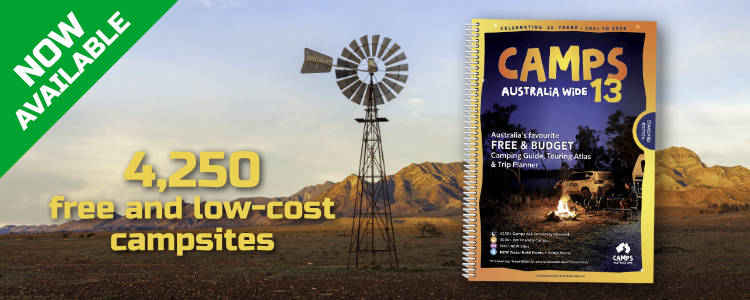
Camps Australia Wide This book/app is worth its weight in gold. Lists thousands of free and low-cost camps with reviews, facilities, and GPS coordinates.
WikiCamps Another great app. User-generated reviews mean you know exactly what you’re getting into. “No phone coverage, beautiful spot, got bogged if wet” – that sort of useful intel.
Local Knowledge – Servo attendants, grey nomads at dump points, locals at the pub – everyone’s got their favourite spot they’ll share if you ask nicely.
Station Stays – Heaps of stations offer camping for $10-20 per night. Not free, but you’re supporting farmers, often getting hot showers, and camping in spectacular spots.
State Forests & National Parks – While not always free, they are usually way cheaper than caravan parks and a lot closer to nature.
Roadside Rest Areas – For quick, easy and free overnight stops take advantage of the hundreds of roadside rest areas around the country.
Bush Camping – Once you venture into more remote areas you can often find side tracks, work camps and other spots to just quietly drive off the main road and find a place to stop for the night. Think ‘stealth mode’ here.
Showgrounds – Many country towns open up their Showgrounds for basic camping at lower prices than nearby caravan parks.
The Mindset Shift
The biggest barrier to free camping isn’t the setup – it’s the mindset. We’ve been programmed to think we need all these facilities to be comfortable.
But here’s what you discover on the road: The best shower you’ll ever have is a solar bag shower under the stars. The best meal is the barramundi you caught yourself, cooked on your own camp fire. The best entertainment is watching the sunset with a cold beer, not some tired caravan park happy hour.
You know what you won’t remember from your Big Lap? That night in the caravan park with full amenities.
You know what you will remember? Waking up at Bitter Springs with mist on the water. Finding that hidden beach camp in Western Australia where you were the only humans for 50 kilometers. The night the dingoes visited your camp at Rainbow Beach. The morning a platypus swam past your van at Carnarvon Gorge.
The Strategic Park Strategy
Now, I’m not completely anti-caravan park. They have their place and inevitably many of the spots you go to won’t have any viable free/low cost camping and caravan parks will be your only option.
Here’s how to use them smartly:
Laundry Day Every 10-14 days, book a park. Do all your washing, fill your water tanks, empty everything that needs emptying, charge everything chargeable, have a long hot shower, maybe even use the camp kitchen for a proper roast.
Weather Havens When a cyclone’s bearing down or it’s been raining for a week, sometimes you need power and a dry concrete pad. No shame in that.
City Stops Free camping in cities and some remote locations is often impossible. Caravan parks make sense here.
Social Batteries If you’re travelling with kids or just need some social interaction, parks can be good for meeting other travellers, kids making friends, maybe using the pool.
Your Free Camping Action Plan
Want to save that $10,000+? Here’s exactly what to do:
- Get the right apps: WikiCamps and Camps Australia Wide, minimum
- Sort your power: At least 200W solar and a decent battery system
- Water capacity: 100L minimum, more is better
- Join the groups: Facebook groups to connect with fellow travellers
- Start small: Do weekend free camping trips before your Big Lap to get comfortable
- Budget for setup: Spend $3-5K on gear to save $10K+ on the road
The Bottom Line
Every night you pay for a powered site may be a night less on the road. That’s the brutal truth.
For my money (literally), I’ll take the free camp by the river, cook my own dinner, and save that $50. Because in the end, the Big Lap isn’t about the comfort of your campsite – it’s about the size of your adventure.
And adventures don’t happen in row C, site 47, next to the amenities block.